

As a supplier of 4D HIFU machines, I often receive inquiries from beauty clinics, spas, and individual practitioners about the versatility of our devices. One question that frequently comes up is whether a 4D HIFU machine can be used for the treatment of horizontal forehead lines. In this blog post, I'll delve into the science behind HIFU technology, explain how it can address horizontal forehead lines, and provide insights into the effectiveness and limitations of using a 4D HIFU machine for this specific treatment.
Understanding HIFU Technology
High-Intensity Focused Ultrasound (HIFU) is a non-invasive cosmetic treatment that uses focused ultrasound energy to target specific layers of the skin and underlying tissues. This technology has gained popularity in recent years due to its ability to stimulate collagen production, tighten the skin, and reduce the appearance of wrinkles without the need for surgery.
The principle behind HIFU is based on the precise delivery of ultrasound energy to a specific depth within the skin. When the ultrasound waves are focused at a particular point, they generate heat, which causes the targeted tissues to contract and stimulate the production of new collagen. Collagen is a protein that provides structure and elasticity to the skin, and as we age, its production naturally declines, leading to the formation of wrinkles and sagging skin.
How 4D HIFU Machines Work
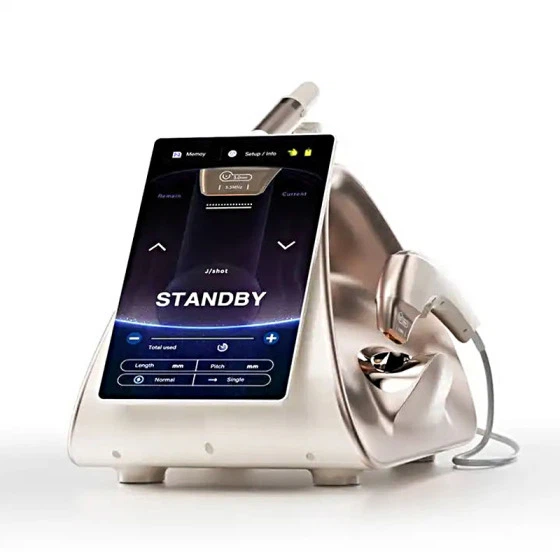
A 4D HIFU machine is an advanced version of the traditional HIFU technology that offers enhanced precision and control. The "4D" refers to the four-dimensional approach, which includes depth, intensity, area, and visualization. This allows practitioners to customize the treatment according to the patient's specific needs and skin condition.
The depth control feature of a 4D HIFU machine enables the practitioner to target different layers of the skin, from the superficial dermis to the deeper subcutaneous tissues. This is particularly important when treating horizontal forehead lines, as the depth of the wrinkles can vary depending on their severity and the individual's skin type.
The intensity control allows the practitioner to adjust the amount of energy delivered to the targeted tissues, ensuring that the treatment is both effective and safe. By using a combination of different depths and intensities, the 4D HIFU machine can stimulate collagen production at multiple levels, resulting in a more comprehensive and long-lasting improvement in the appearance of the skin.
The area control feature allows the practitioner to treat specific areas of the face, such as the forehead, without affecting the surrounding tissues. This is important for minimizing the risk of side effects and ensuring a more precise and targeted treatment.
Finally, the visualization feature of a 4D HIFU machine provides real-time feedback on the treatment process, allowing the practitioner to monitor the effects of the ultrasound energy on the skin and adjust the settings as needed. This helps to ensure that the treatment is both effective and safe.
Treating Horizontal Forehead Lines with a 4D HIFU Machine
Horizontal forehead lines, also known as forehead wrinkles or frown lines, are a common sign of aging that can make a person look tired, angry, or older than their actual age. These lines are typically caused by repeated muscle contractions in the forehead, as well as the natural loss of collagen and elastin in the skin.
A 4D HIFU machine can be an effective treatment option for horizontal forehead lines, as it can stimulate collagen production and tighten the skin, reducing the appearance of wrinkles. The treatment is non-invasive and requires no downtime, making it a popular choice for patients who want to improve the appearance of their skin without undergoing surgery.
During a 4D HIFU treatment for horizontal forehead lines, the practitioner will first clean the skin and apply a numbing cream to minimize any discomfort. The 4D HIFU machine will then be used to deliver focused ultrasound energy to the targeted areas of the forehead, using the depth, intensity, and area control features to customize the treatment according to the patient's specific needs and skin condition.
The treatment typically takes between 30 minutes to an hour, depending on the severity of the wrinkles and the size of the treatment area. After the treatment, the patient may experience some redness, swelling, or mild discomfort, which usually subsides within a few hours to a few days.
Most patients will notice an immediate improvement in the appearance of their skin after a 4D HIFU treatment, although the full results may take several weeks to months to become apparent as the new collagen is produced. Multiple treatments may be recommended to achieve the best results, and the frequency of the treatments will depend on the patient's individual needs and skin condition.
Effectiveness and Limitations of 4D HIFU for Horizontal Forehead Lines
The effectiveness of a 4D HIFU machine for treating horizontal forehead lines depends on several factors, including the severity of the wrinkles, the patient's skin type and condition, and the skill and experience of the practitioner. In general, 4D HIFU can be an effective treatment option for mild to moderate horizontal forehead lines, as it can stimulate collagen production and tighten the skin, reducing the appearance of wrinkles.
However, it's important to note that 4D HIFU is not a substitute for surgery, and it may not be suitable for patients with severe or deep wrinkles. In these cases, more invasive treatments such as a facelift or brow lift may be recommended.

In addition, the results of a 4D HIFU treatment are not permanent, and the effects of the treatment will gradually fade over time as the new collagen breaks down. To maintain the results, patients may need to undergo regular maintenance treatments every 6 to 12 months.
Other HIFU Machine Options
In addition to the 4D HIFU machine, there are other types of HIFU machines available on the market that can also be used for treating horizontal forehead lines. These include the 9D HIFU Machine, the Ultrasonic Face Lifting HIFU Machine, and the 12D Hifu Wrinkle Removal HIFU Machine.
Each of these machines offers different features and benefits, and the choice of machine will depend on the specific needs and preferences of the patient and the practitioner. For example, the 9D HIFU machine offers even greater precision and control than the 4D HIFU machine, while the Ultrasonic Face Lifting HIFU Machine is designed specifically for facial lifting and tightening. The 12D Hifu Wrinkle Removal HIFU Machine is a more advanced version of the HIFU technology that offers enhanced wrinkle removal capabilities.
Conclusion
In conclusion, a 4D HIFU machine can be an effective treatment option for horizontal forehead lines, as it can stimulate collagen production and tighten the skin, reducing the appearance of wrinkles. The treatment is non-invasive and requires no downtime, making it a popular choice for patients who want to improve the appearance of their skin without undergoing surgery.
However, it's important to note that the effectiveness of the treatment depends on several factors, including the severity of the wrinkles, the patient's skin type and condition, and the skill and experience of the practitioner. In addition, the results of the treatment are not permanent, and patients may need to undergo regular maintenance treatments to maintain the results.
If you're interested in learning more about using a 4D HIFU machine for the treatment of horizontal forehead lines, or if you're considering purchasing a 4D HIFU machine for your beauty clinic or spa, please don't hesitate to contact us. Our team of experts is available to answer any questions you may have and to provide you with more information about our products and services. We look forward to hearing from you and helping you achieve your beauty goals.
References
- Bitter, P. H., Jr., & Pozner, J. N. (2012). High-intensity focused ultrasound: a novel nonablative approach to skin tightening. Journal of Drugs in Dermatology, 11(10), 1175-1181.
- Goldman, M. P., Bae, Y. S., & Fitzpatrick, R. E. (2014). A randomized, evaluator-blinded, multicenter trial of a high-intensity focused ultrasound device for noninvasive facial lifting. Dermatologic Surgery, 40(7), 795-803.
- Rullan, E. (2013). High-intensity focused ultrasound for noninvasive facial skin tightening: a new approach. Plastic and Reconstructive Surgery, 132(3), 405-413.