

Angiomas are common vascular lesions that can appear on various parts of the body. They range from small, harmless spots to larger, more noticeable growths. As a supplier of Co2 Laser Fractional Machines, I often receive inquiries about the feasibility of using our machines to treat angiomas. In this blog post, I'll explore this topic in detail, examining the science behind Co2 laser treatment, its potential effectiveness on angiomas, and other related aspects.
Understanding Co2 Laser Fractional Machines
Co2 laser fractional machines are advanced medical - aesthetic devices that have gained significant popularity in recent years. These machines use a carbon dioxide laser to create tiny, precise columns of thermal energy in the skin. Unlike traditional lasers that treat the entire surface area at once, fractional lasers target only a fraction of the skin, leaving the surrounding tissue intact. This allows for faster healing and fewer side - effects.
The principle behind Co2 laser fractional technology is based on the selective absorption of laser energy by water in the skin. When the laser is applied, the water in the targeted skin cells absorbs the energy, causing the cells to vaporize. This process stimulates the body's natural healing response, promoting the production of collagen and elastin, which are essential for skin rejuvenation and repair.
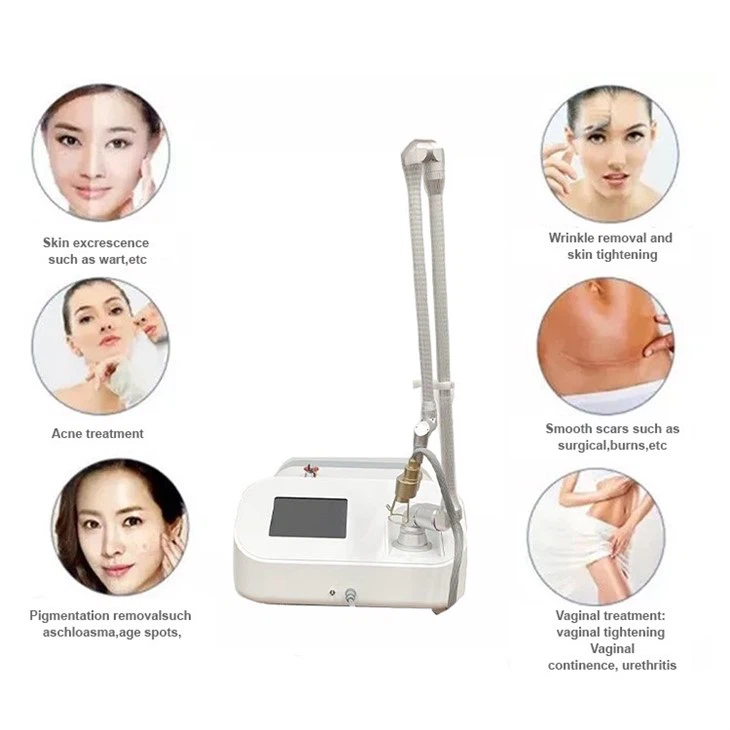
Our company offers a range of Co2 laser fractional machines, including the Co2 Laser Vagina Tightening Machine, High Quality Fractional Co2 Laser Machine, and Co2 Laser Skin Resurfacing Machine. Each of these machines is designed with specific features and settings to meet different treatment needs.
What are Angiomas?
Angiomas are benign growths that result from an overgrowth of blood vessels. There are several types of angiomas, including cherry angiomas, spider angiomas, and cavernous angiomas. Cherry angiomas are small, round, red or purple bumps that are commonly found on the trunk, arms, and legs. Spider angiomas, on the other hand, have a central red spot with thin, spider - like blood vessels radiating from it. They are often seen on the face, neck, and upper chest. Cavernous angiomas are larger and deeper, consisting of dilated blood vessels in the deeper layers of the skin or other tissues.
Angiomas are usually harmless and do not require treatment. However, some people may choose to have them removed for cosmetic reasons or if they cause discomfort or bleeding.
Can a Co2 Laser Fractional Machine be Used to Treat Angiomas?
The short answer is yes, a Co2 laser fractional machine can potentially be used to treat angiomas. The laser energy can be adjusted to target the blood vessels within the angioma. When the laser is applied, the heat from the laser causes the blood vessels to coagulate and eventually collapse. This reduces the appearance of the angioma and may lead to its complete removal.
However, the effectiveness of Co2 laser treatment for angiomas depends on several factors. Firstly, the type of angioma plays a crucial role. Cherry angiomas, which are superficial and relatively small, are generally more responsive to Co2 laser treatment. The laser can easily reach the blood vessels in these angiomas and cause them to seal off. Spider angiomas may also respond well, especially if they are not too large or deep - seated.
Cavernous angiomas, on the other hand, are more challenging to treat. Since they are located deeper in the skin or other tissues, the laser may not be able to penetrate deeply enough to effectively target all the blood vessels. In some cases, multiple treatment sessions may be required, and even then, complete removal may not be achieved.
Another factor is the size of the angioma. Larger angiomas may require more energy and multiple passes of the laser, which can increase the risk of side - effects such as scarring, pigmentation changes, and skin irritation.
Treatment Process
Before starting the treatment, a thorough consultation is necessary. The patient's medical history, the type and size of the angioma, and their skin type should be carefully evaluated. This helps the operator to determine the most appropriate settings for the Co2 laser fractional machine.
During the treatment, the patient's skin will be cleaned and a topical anesthetic may be applied to minimize discomfort. The laser is then applied to the angioma in a controlled manner. The operator will adjust the power, pulse duration, and other parameters based on the characteristics of the angioma.
After the treatment, the treated area may be red, swollen, and slightly painful. This is a normal reaction and usually subsides within a few days. The patient will be given post - treatment instructions, which may include keeping the area clean, avoiding sun exposure, and applying a soothing cream.
Advantages of Using Co2 Laser Fractional Machines for Angioma Treatment
One of the main advantages of using a Co2 laser fractional machine for angioma treatment is its precision. The fractional technology allows for targeted treatment, minimizing damage to the surrounding healthy skin. This results in a faster recovery time compared to traditional surgical methods.

Another advantage is the reduced risk of scarring. Since the laser promotes collagen production and skin regeneration, the treated area is more likely to heal smoothly, leaving minimal or no visible scarring.
In addition, Co2 laser fractional treatment is a relatively non - invasive procedure. It can be performed in an outpatient setting, and patients can usually resume their normal activities shortly after the treatment.
Potential Side - Effects and Risks
Although Co2 laser fractional treatment for angiomas is generally safe, there are some potential side - effects. These include temporary redness, swelling, and pain at the treatment site. In some cases, there may be a risk of infection, especially if proper post - treatment care is not followed.
Pigmentation changes are also a possible side - effect. The treated area may become darker or lighter than the surrounding skin. This is more common in patients with darker skin tones. However, these pigmentation changes are usually temporary and can be managed with appropriate skincare and sun protection.
Scarring is a rare but possible complication, especially if the laser settings are not properly adjusted or if the patient has a history of keloid formation.
Conclusion
In conclusion, a Co2 laser fractional machine can be a viable option for treating certain types of angiomas, especially cherry and spider angiomas. However, it is important to note that the treatment should be carried out by a trained and experienced operator. A proper pre - treatment evaluation is essential to determine the suitability of the treatment and to minimize the risk of side - effects.
If you are interested in using our Co2 laser fractional machines for angioma treatment or other aesthetic applications, we encourage you to contact us for more information. Our team of experts can provide you with detailed product information, technical support, and guidance on the treatment process. We look forward to discussing your needs and helping you find the most suitable solution for your business.
References
- Alster TS, Lupton JR. Comparison of high - energy pulsed CO2 and Er:YAG lasers for facial resurfacing. Dermatol Surg. 1998;24(2):131 - 135.
- Goldman MP, Ross EV. Laser treatment of port - wine stains and other vascular lesions. Dermatol Clin. 2006;24(3):329 - 338.
- Tanzi EL, Alster TS. Laser treatment of leg veins. Semin Cutan Med Surg. 2004;23(4):243 - 249.