

As a supplier of cryolipolysis machines, I've witnessed firsthand the growing popularity of this non - invasive fat reduction technology. Cryolipolysis, often referred to as fat freezing, has become a go - to solution for many individuals looking to shed stubborn fat without the need for surgery. However, one question that frequently arises is: How accurate is the fat reduction measurement of a cryolipolysis machine?
Understanding Cryolipolysis
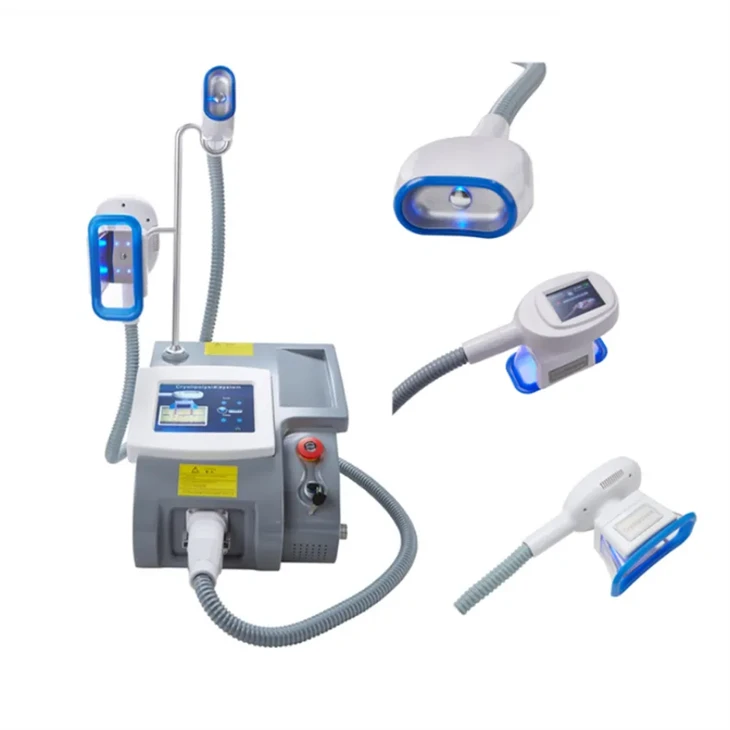
Before delving into the accuracy of fat reduction measurement, it's essential to understand how cryolipolysis works. Cryolipolysis machines, such as the Cryolipolysis Fat Freezing Machine, use controlled cooling to target and eliminate fat cells. The principle behind this is that fat cells are more sensitive to cold temperatures than surrounding tissues. When exposed to a specific low temperature, fat cells undergo apoptosis (programmed cell death). Over time, the body naturally processes and eliminates these dead fat cells through the lymphatic system.
Methods of Measuring Fat Reduction
There are several methods used to measure the fat reduction achieved by cryolipolysis machines. Each method has its own level of accuracy and limitations.
Caliper Measurements
One of the simplest and most commonly used methods is skinfold caliper measurements. This involves using a caliper to measure the thickness of skinfolds at specific body sites. By taking measurements before and after cryolipolysis treatment, an estimate of fat reduction can be obtained. However, caliper measurements are highly operator - dependent. Different operators may apply different amounts of pressure when using the caliper, leading to inconsistent results. Also, calipers only measure subcutaneous fat, which may not accurately represent the overall fat reduction in deeper layers.
Bioelectrical Impedance Analysis (BIA)
BIA is another popular method. It works by sending a small electrical current through the body and measuring the impedance (resistance) to the current flow. Since fat has a higher impedance than lean tissue, the device can estimate the body fat percentage. BIA is relatively quick and non - invasive. However, factors such as hydration levels, recent food intake, and the time of day can significantly affect the accuracy of BIA measurements. For example, if a person is dehydrated, the device may overestimate the body fat percentage.
Dual - Energy X - ray Absorptiometry (DXA)
DXA is considered one of the most accurate methods for measuring body composition, including fat mass. It uses two different energy X - ray beams to differentiate between bone, fat, and lean tissue. DXA can provide detailed information about regional fat distribution in the body. However, DXA machines are expensive and not widely available. Also, they expose the patient to a small amount of radiation, which may be a concern for some individuals.
Magnetic Resonance Imaging (MRI) and Computed Tomography (CT)
MRI and CT scans can provide highly detailed images of the body's internal structures, allowing for accurate measurement of fat volume. These imaging techniques can distinguish between subcutaneous and visceral fat and provide three - dimensional views of fat distribution. However, they are costly, time - consuming, and may not be practical for routine follow - up measurements.
Factors Affecting the Accuracy of Fat Reduction Measurement
In addition to the limitations of the measurement methods, several other factors can affect the accuracy of fat reduction measurement in cryolipolysis treatments.

Individual Variations
Every individual's body responds differently to cryolipolysis. Factors such as age, gender, genetics, and overall health can influence the body's ability to eliminate dead fat cells. For example, younger individuals may have a more efficient lymphatic system, which can lead to faster and more complete elimination of fat cells. On the other hand, older individuals or those with certain health conditions may experience slower fat reduction.
Treatment Parameters
The effectiveness of cryolipolysis treatment and the accuracy of fat reduction measurement are also affected by treatment parameters. These include the temperature, duration, and intensity of the cold application. If the treatment temperature is not low enough or the duration is too short, the fat cells may not be effectively destroyed. Also, inconsistent treatment parameters across different sessions can lead to variable results.
Multiple Treatments
Many patients require multiple cryolipolysis treatments to achieve their desired fat reduction goals. Measuring the fat reduction after each treatment can be challenging. The cumulative effect of multiple treatments may not be linearly related to the number of treatments. For example, the body may become less efficient at eliminating dead fat cells after repeated treatments, leading to a plateau in fat reduction.
Real - World Accuracy of Cryolipolysis Machines
In real - world settings, the reported fat reduction rates vary widely. Clinical studies have shown that cryolipolysis can lead to an average fat reduction of 20 - 25% in the treated area. However, these results are based on a combination of different measurement methods and may not be applicable to every individual.
Our New Portable Roller Therapy Machine and 360 Cryolipolysis Slimming Machine are designed to optimize the cryolipolysis process and improve the accuracy of fat reduction. These machines use advanced cooling technology to ensure consistent and effective treatment. The portable design of the roller therapy machine allows for targeted treatment of specific areas, while the 360 - degree slimming machine can cover larger areas, providing more comprehensive fat reduction.
Improving the Accuracy of Fat Reduction Measurement
To improve the accuracy of fat reduction measurement, a combination of methods is often recommended. For example, using DXA or MRI for initial and final measurements, along with regular caliper or BIA measurements during the treatment process. This can provide a more comprehensive and accurate picture of the fat reduction achieved.
Also, it's important to standardize the measurement process. This includes using the same measurement method, the same operator, and consistent measurement conditions (such as time of day and hydration levels) for all pre - and post - treatment measurements.
Conclusion
The accuracy of fat reduction measurement in cryolipolysis machines is a complex issue. While there are several methods available to measure fat reduction, each method has its own limitations. Factors such as individual variations, treatment parameters, and the choice of measurement method can all affect the accuracy of the results.
As a supplier of cryolipolysis machines, we are committed to providing high - quality products that deliver effective fat reduction. Our machines are designed with the latest technology to ensure consistent and reliable treatment results. If you are interested in learning more about our cryolipolysis machines or would like to discuss a potential purchase, we encourage you to contact us for a detailed consultation. We look forward to working with you to achieve your fat reduction goals.
References
- Klein, A., & Aronowitz, J. (2013). Cryolipolysis for noninvasive body contouring: clinical efficacy and patient satisfaction. Dermatologic Surgery, 39(11), 1655 - 1666.
- Avram, M. M., & Harry, R. S. (2009). Cryolipolysis™ for subcutaneous fat layer reduction. Lasers in Surgery and Medicine, 41(7), 460 - 466.
- Gallagher, D., & Heymsfield, S. B. (2003). Human body composition: in vivo methods. Annual Review of Nutrition, 23(1), 195 - 223.