

Harmonic distortion is a critical aspect to consider when dealing with RF (Radio Frequency) Equipment Machines. As a supplier of RF Equipment Machines, understanding these characteristics is not only essential for product development but also for ensuring customer satisfaction. In this blog, we will delve into the harmonic distortion characteristics of RF Equipment Machines, exploring what causes it, its effects, and how we, as a supplier, manage it in our products.
What is Harmonic Distortion in RF Equipment Machines?
Harmonic distortion in RF Equipment Machines refers to the presence of unwanted harmonic frequencies in the output signal. When an RF signal is generated, it ideally consists of a single fundamental frequency. However, due to non - linearities in the components of the RF Equipment Machine, additional frequencies that are integer multiples of the fundamental frequency are produced. These are called harmonics.
For example, if the fundamental frequency of an RF signal is (f_0), the second harmonic will have a frequency of (2f_0), the third harmonic will have a frequency of (3f_0), and so on. The presence of these harmonics can lead to various issues, such as interference with other communication systems operating in the same frequency band.
Causes of Harmonic Distortion in RF Equipment Machines
There are several factors that can cause harmonic distortion in RF Equipment Machines. One of the primary causes is the non - linear behavior of active components, such as transistors and amplifiers. These components are designed to amplify the input signal, but their response is not always perfectly linear. When the input signal exceeds the linear operating range of these components, harmonic frequencies are generated.
Another cause is the presence of passive components with non - linear characteristics. For instance, some types of capacitors and inductors may exhibit non - linear behavior under certain conditions, leading to harmonic distortion. Additionally, poor circuit design, such as improper grounding or impedance matching, can also contribute to harmonic distortion.
Effects of Harmonic Distortion
Harmonic distortion can have several negative effects on the performance of RF Equipment Machines. Firstly, it can cause interference with other communication systems. The unwanted harmonic frequencies may fall within the operating frequency bands of other devices, leading to signal degradation and reduced communication quality.
Secondly, harmonic distortion can reduce the efficiency of the RF Equipment Machine. The power that is used to generate the harmonic frequencies is wasted, as these frequencies are not part of the desired output signal. This can result in increased power consumption and reduced battery life for portable RF devices.
Finally, harmonic distortion can also affect the accuracy of measurement and testing equipment. In applications where precise measurement of RF signals is required, the presence of harmonics can introduce errors in the measurement results.
Harmonic Distortion Characteristics in Our RF Equipment Machines
As a supplier of RF Equipment Machines, we are well - aware of the importance of managing harmonic distortion. We have implemented several measures to ensure that our products have low harmonic distortion levels.
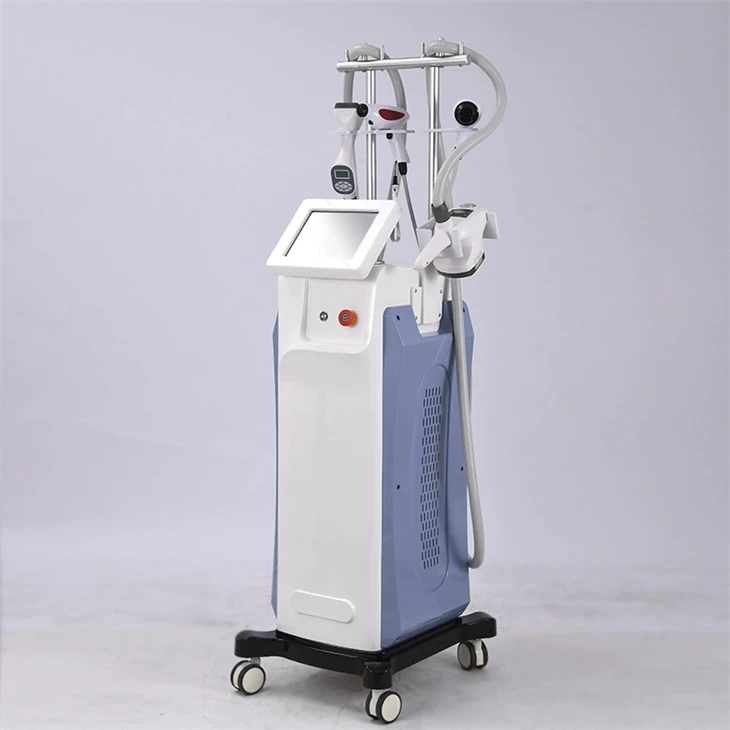
In our X9 Vela Body Shape Machine, we use high - quality active components that have excellent linearity characteristics. These components are carefully selected and tested to ensure that they operate within their linear range under normal operating conditions. Additionally, we have optimized the circuit design of the machine to minimize non - linearities. This includes proper grounding and impedance matching techniques to reduce the generation of harmonic frequencies.
Our Gold RF Crystallite Depth Machine also incorporates advanced filtering techniques to suppress harmonic distortion. The machine is equipped with low - pass filters that are designed to block the higher - order harmonic frequencies while allowing the fundamental frequency to pass through. This helps to ensure that the output signal is clean and free from unwanted harmonics.
Similarly, our PE Face Machine uses state - of - the - art digital signal processing algorithms to reduce harmonic distortion. These algorithms can detect and correct the non - linearities in the signal in real - time, resulting in a more accurate and high - quality output.
Measuring Harmonic Distortion in RF Equipment Machines
To ensure the quality of our products, we regularly measure the harmonic distortion levels of our RF Equipment Machines. We use specialized test equipment, such as spectrum analyzers and harmonic distortion analyzers, to measure the amplitude and frequency of the harmonic components in the output signal.
The most common way to quantify harmonic distortion is by calculating the total harmonic distortion (THD). THD is defined as the ratio of the sum of the powers of all harmonic frequencies to the power of the fundamental frequency. A lower THD value indicates lower harmonic distortion and better performance of the RF Equipment Machine.
Managing Harmonic Distortion in Different Applications
The requirements for harmonic distortion management vary depending on the application of the RF Equipment Machine. In communication systems, strict regulations are in place to limit the amount of harmonic distortion that a device can generate. This is to ensure that the communication channels are not interfered with by unwanted harmonic frequencies.
In medical applications, such as our body shape and face machines, low harmonic distortion is also crucial. The accuracy of the RF signals used in these applications is essential for achieving the desired therapeutic effects. High harmonic distortion levels can lead to inaccurate treatment results and potential harm to the patients.

In industrial applications, harmonic distortion can affect the performance of other equipment in the vicinity. For example, in a factory environment, RF Equipment Machines with high harmonic distortion levels can interfere with the operation of sensors and control systems.
Conclusion
Harmonic distortion is a significant issue in RF Equipment Machines, but with proper design and management, it can be effectively controlled. As a supplier of RF Equipment Machines, we are committed to providing our customers with high - quality products that have low harmonic distortion levels. Our X9 Vela Body Shape Machine, Gold RF Crystallite Depth Machine, and PE Face Machine are all designed with advanced technologies to minimize harmonic distortion and ensure optimal performance.
If you are interested in our RF Equipment Machines or have any questions about harmonic distortion, please feel free to contact us for procurement and further discussions. We look forward to serving you and meeting your RF equipment needs.
References
- Pozar, D. M. (2011). Microwave Engineering. Wiley.
- Razavi, B. (2011). RF Microelectronics. Prentice Hall.
- Haykin, S. (2001). Communication Systems. Wiley.