

Hey there! As a supplier of Hifu Machines, I often get asked about the differences between Hifu Machines and other skin tightening devices. In this blog, I'll break down these differences to help you understand which device might be the best fit for your needs.
Let's start with a quick intro to Hifu Machines. Hifu stands for High - Intensity Focused Ultrasound. It's a non - invasive technology that uses ultrasound energy to target specific layers of the skin. This energy heats up the tissue, which stimulates collagen production. Collagen is a protein that gives our skin its elasticity and firmness. As we age, our natural collagen production slows down, leading to sagging skin, wrinkles, and fine lines. Hifu Machines can help reverse some of these signs of aging by kick - starting that collagen production again.
Now, let's compare Hifu Machines with other common skin tightening devices.
Radiofrequency (RF) Devices
RF devices are another popular option for skin tightening. They work by delivering radiofrequency energy to the skin. This energy heats the dermis, the layer of skin just below the epidermis. The heat causes the collagen fibers in the dermis to contract, which gives an immediate tightening effect. Over time, the heat also stimulates new collagen growth.
One of the main differences between Hifu and RF devices is the depth of penetration. Hifu Machines can target deeper layers of the skin, including the superficial muscular aponeurotic system (SMAS). The SMAS is the layer that is typically addressed in surgical facelifts. RF devices, on the other hand, usually only reach the dermis. This means that Hifu Machines can provide more significant and long - lasting results, especially for more severe skin sagging.
Another difference is the sensation during treatment. RF treatments are generally less painful than Hifu treatments. With RF, you might feel a warm sensation, similar to a hot stone massage. Hifu treatments can be a bit more intense. Some patients describe it as a series of tiny pinpricks or a snapping sensation as the ultrasound energy is delivered. However, the level of discomfort can vary from person to person.
Laser Skin Tightening Devices
Laser devices use concentrated light energy to heat the skin. Different types of lasers can target different layers of the skin. For skin tightening, erbium and CO2 lasers are commonly used. These lasers remove the outer layer of the skin (epidermis) and heat the underlying dermis, stimulating collagen production.
Compared to Hifu Machines, laser treatments are more invasive. They often require a longer recovery time because of the damage to the epidermis. After a laser treatment, you might experience redness, swelling, and peeling for several days or even weeks. Hifu treatments, being non - invasive, have minimal downtime. You can usually go back to your normal activities right after the treatment, although some people might have mild redness or swelling that goes away within a few hours.
In terms of results, both Hifu and laser treatments can improve skin tightness. But Hifu can be a better option for those who want a non - invasive treatment with quick results and minimal recovery time. Laser treatments might be more suitable for people with more severe skin issues, such as deep wrinkles, who are willing to go through a more intensive treatment process.
Ultrasound Cavitation Devices
Ultrasound cavitation devices are mainly used for body contouring and fat reduction. They use low - frequency ultrasound waves to create bubbles in the fat cells. These bubbles then burst, causing the fat cells to break down. The body then eliminates the broken - down fat through the lymphatic system.
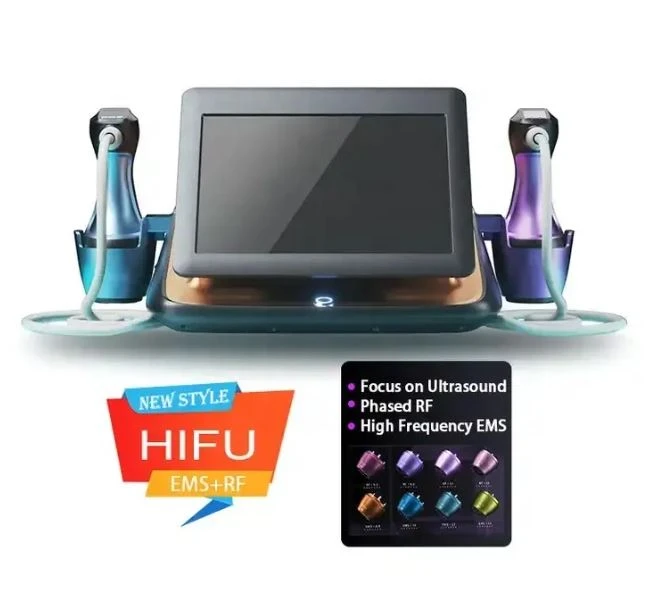

While Hifu Machines also use ultrasound technology, their purpose is different. Hifu is focused on skin tightening and collagen stimulation, not fat reduction. So, if your main goal is to get rid of excess fat, an ultrasound cavitation device might be more appropriate. But if you're looking to tighten loose skin, a LIposonix Hifu Machine or a 9d Hifu Machine would be a better choice.
EMS (Electrical Muscle Stimulation) Devices
EMS devices use electrical impulses to stimulate muscle contractions. They are often used for muscle toning and strengthening, especially in the fitness and beauty industries. In the context of skin tightening, EMS can help improve muscle tone in the face and body, which can give a more lifted appearance.
However, EMS mainly works on the muscles, while Hifu targets the skin and the underlying connective tissues. Hifu can provide a more comprehensive solution for skin tightening as it not only affects the surface appearance but also stimulates the production of new collagen in the deeper layers. There are also 3 in 1 EMS RF Hifu Machine that combine the benefits of EMS, RF, and Hifu technologies, offering a more multi - faceted approach to skin rejuvenation.
Advantages of Hifu Machines
- Non - invasive: You don't have to go under the knife. There are no incisions, no scars, and no long - term recovery.
- Precision: Hifu Machines can target specific areas of the skin with high precision. This means that you can focus on problem areas like the jowls, neck, or décolletage.
- Long - lasting results: The stimulation of collagen production can lead to visible and long - lasting improvements in skin tightness. Results can continue to improve for several months after the treatment.
- Versatility: Hifu can be used on different parts of the body, including the face, neck, abdomen, and thighs.
Disadvantages of Hifu Machines
- Discomfort: As mentioned earlier, the treatment can be a bit painful for some people.
- Cost: Hifu treatments can be more expensive than some other skin tightening devices, especially if multiple sessions are required.
- Not suitable for everyone: People with certain skin conditions, such as open wounds, infections, or severe skin diseases, might not be good candidates for Hifu treatments.
In conclusion, Hifu Machines offer a unique set of benefits when compared to other skin tightening devices. Their ability to target deeper layers of the skin, combined with the long - lasting results and minimal downtime, makes them a popular choice for many people. Whether you're a beauty salon owner looking to expand your services or an individual interested in improving your skin's appearance, a Hifu Machine could be a great investment.
If you're interested in learning more about our Hifu Machines or have any questions about the differences between Hifu and other skin tightening devices, feel free to reach out. We're here to help you make the best decision for your skin and your business. Let's start a conversation about how our Hifu Machines can meet your needs!
References
- Alam M, Dover JS. Nonablative cutaneous remodeling using radiofrequency technology. Dermatol Surg. 2004;30(1 Pt 2):442 - 448.
- Bitter PH Jr. Laser resurfacing of photoaged skin. Dermatol Clin. 2001;19(4):719 - 732.
- Goldman MP, Weiss RA, Geronemus RG. Soft - tissue tightening with radiofrequency: safety and efficacy. Dermatol Surg. 2004;30(1 Pt 2):449 - 458.