

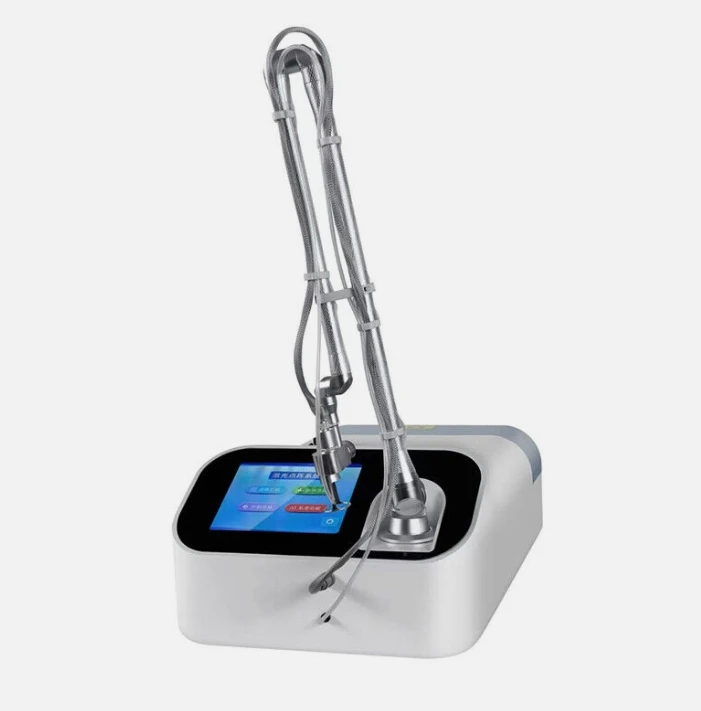
The frequency of a CO2 laser fractional machine is a crucial parameter that significantly impacts its performance and effectiveness in various skin treatments. As a supplier of CO2 laser fractional machines, I understand the importance of this technical aspect and its implications for both practitioners and patients. In this blog, I will delve into the concept of frequency in CO2 laser fractional machines, its significance, and how it relates to different treatment applications.
Understanding the Frequency of a CO2 Laser Fractional Machine
Frequency, in the context of a CO2 laser fractional machine, refers to the number of laser pulses emitted per second. It is measured in Hertz (Hz). For example, a frequency of 1 Hz means that the laser emits one pulse every second, while a frequency of 10 Hz means it emits ten pulses per second. The frequency setting on a CO2 laser fractional machine can typically be adjusted within a certain range, allowing practitioners to customize the treatment according to the patient's skin condition, the treatment area, and the desired outcome.
Significance of Frequency in CO2 Laser Fractional Treatments
1. Depth of Penetration
The frequency of the laser pulses can influence the depth of penetration into the skin. Generally, lower frequencies (e.g., 1 - 5 Hz) are associated with deeper penetration. This is because at lower frequencies, each laser pulse has more time to deliver energy to the skin, allowing it to penetrate deeper layers. Deeper penetration is often required for treating more severe skin conditions such as deep acne scars or significant skin laxity. For instance, when using a CO2 Laser Acne Scar Removal Machine to target deep acne scars, a lower frequency may be selected to ensure that the laser energy reaches the affected areas deep within the skin.

On the other hand, higher frequencies (e.g., 10 - 50 Hz) result in shallower penetration. The rapid succession of pulses at higher frequencies causes the energy to be distributed more superficially across the skin surface. This is suitable for treatments that aim to improve the appearance of the skin's surface, such as treating fine lines, wrinkles, and mild pigmentation issues. A Co2 Laser Skin Resurfacing Machine used for superficial skin resurfacing may be set at a higher frequency to achieve a smoother and more even skin texture.
2. Thermal Damage and Healing Time
The frequency also affects the amount of thermal damage to the surrounding skin tissue. Lower frequencies tend to cause more thermal damage because each pulse delivers a relatively large amount of energy in a single burst. While this can be effective for treating deep - seated skin problems, it also means a longer healing time for the patient. The skin needs more time to repair the damage caused by the laser, and there may be more visible side effects such as redness, swelling, and crusting during the healing process.
Higher frequencies, in contrast, cause less thermal damage. The rapid succession of smaller - energy pulses allows the skin to dissipate heat more effectively between pulses. This results in a shorter healing time and fewer side effects. For patients who have a busy lifestyle and cannot afford a long recovery period, treatments using higher - frequency settings on a Skin Rejuvenation Laser CO2 Fractional Machine may be more suitable.
3. Treatment Speed
Frequency also plays a role in the overall treatment speed. Higher frequencies enable faster treatment because more pulses are delivered in a given time. This can be beneficial for both the practitioner and the patient. Practitioners can treat larger areas more quickly, increasing their efficiency and allowing them to see more patients in a day. Patients, on the other hand, can complete their treatment in a shorter amount of time, which is often more convenient.

Frequency Selection for Different Treatment Applications
1. Acne Scar Treatment
As mentioned earlier, deep acne scars usually require deeper penetration of the laser energy. Therefore, a lower frequency (around 1 - 5 Hz) is often selected. This allows the laser to target the scar tissue deep within the skin and stimulate collagen production, which is essential for scar remodeling. However, the exact frequency setting may also depend on the type and severity of the acne scars. For example, ice - pick scars may require a slightly different frequency compared to boxcar or rolling scars.
2. Skin Resurfacing
For skin resurfacing treatments, which aim to improve the overall appearance of the skin by removing the outer layers and stimulating new skin growth, the frequency selection depends on the desired depth of resurfacing. Superficial skin resurfacing, which is used to treat fine lines, mild pigmentation, and uneven skin texture, can be achieved with a higher frequency (10 - 30 Hz). Deeper skin resurfacing, which is more aggressive and may be used for more severe skin damage, may require a lower frequency (5 - 10 Hz).
3. Skin Rejuvenation
Skin rejuvenation treatments focus on improving the skin's tone, texture, and elasticity. These treatments often use a combination of different frequencies. A higher frequency may be used initially to treat the superficial layers of the skin and improve the skin's appearance, followed by a lower frequency to stimulate deeper collagen production and enhance the long - term rejuvenation effects.
Our CO2 Laser Fractional Machines and Frequency Adjustability
At our company, we offer a range of high - quality CO2 laser fractional machines that provide precise frequency adjustment. Our machines are designed with advanced technology to ensure accurate and customizable treatments. The frequency settings can be easily adjusted by the practitioner according to the specific treatment requirements. Whether it's a delicate skin rejuvenation treatment or a more intensive acne scar removal procedure, our machines can be tailored to meet the needs of both the practitioner and the patient.
Conclusion
The frequency of a CO2 laser fractional machine is a key factor that determines the effectiveness and safety of various skin treatments. By understanding the relationship between frequency, depth of penetration, thermal damage, and treatment speed, practitioners can make informed decisions when selecting the appropriate frequency for each patient. As a supplier of CO2 laser fractional machines, we are committed to providing products that offer precise frequency control and excellent performance. If you are interested in our CO2 laser fractional machines or have any questions about frequency settings and treatment applications, please feel free to contact us for further discussion and potential procurement.
References
- Alster, T. S., & Lupton, J. R. (2002). Resurfacing of facial skin with a high - energy, pulsed carbon dioxide laser. Dermatologic Surgery, 28(6), 539 - 545.
- Manstein, D., Herron, G. S., Sink, R. K., Tanner, H., & Anderson, R. R. (2004). Fractional photothermolysis: a new concept for cutaneous remodeling using microscopic patterns of thermal injury. Lasers in Surgery and Medicine, 34(5), 426 - 438.
- Ross, E. V., & Dover, J. S. (2002). Carbon dioxide lasers for skin resurfacing. Seminars in Cutaneous Medicine and Surgery, 21(3), 161 - 172.