

When delving into the world of Hifu (High-Intensity Focused Ultrasound) machines, one of the most frequently asked questions is about the frequency of these devices. As a trusted Hifu machine supplier, I am here to shed light on this crucial aspect and help you understand how frequency impacts the performance and applications of Hifu machines.
Understanding the Basics of Hifu Machine Frequency
Frequency, in the context of Hifu machines, refers to the number of cycles of ultrasound waves produced per second, measured in Hertz (Hz). Different frequencies of ultrasound waves have distinct characteristics and effects on the human body, which are harnessed for various cosmetic and therapeutic purposes.
Lower frequencies, typically in the range of 1 - 3 MHz, can penetrate deeper into the tissues. This makes them suitable for applications such as body contouring and fat reduction. The deeper penetration allows the ultrasound energy to target subcutaneous fat layers without significantly affecting the overlying skin. For example, the LIposonix Hifu Machine often utilizes lower frequencies to precisely target and disrupt fat cells, leading to gradual fat reduction over time.

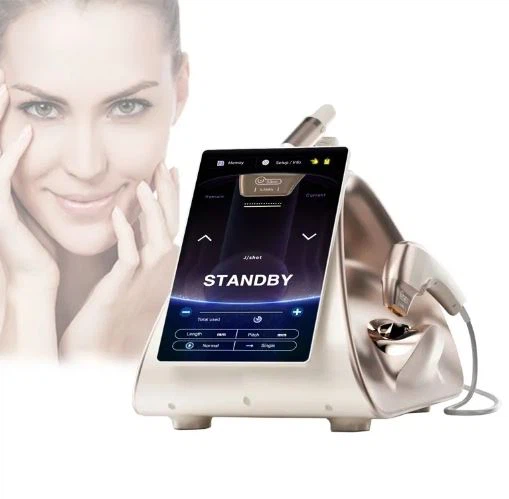
On the other hand, higher frequencies, usually above 3 MHz, have a shallower penetration depth. They are more commonly used for skin tightening and wrinkle reduction. The high - frequency ultrasound waves can stimulate the production of collagen in the dermis, the middle layer of the skin. Collagen is a protein that gives the skin its elasticity and firmness. As we age, collagen production decreases, leading to the formation of wrinkles and sagging skin. By using high - frequency Hifu, we can trigger the body's natural collagen - building process, resulting in a smoother and more youthful complexion. The 12D Hifu Wrinkle Removal Hifu Machine is a prime example of a device that leverages high - frequency ultrasound for effective wrinkle treatment.
Factors Influencing the Choice of Frequency
Several factors come into play when determining the appropriate frequency for a Hifu treatment. The first and most obvious factor is the treatment area. Different parts of the body have different tissue compositions and thicknesses. For instance, the abdominal area has a relatively thick layer of subcutaneous fat, so a lower - frequency Hifu machine would be more suitable for body contouring in this region. In contrast, the delicate skin around the eyes and mouth requires a higher - frequency device to avoid excessive damage while still achieving the desired skin - tightening effect.
The patient's skin type and condition also play a significant role. Patients with thicker, oilier skin may tolerate lower - frequency treatments better, as their skin can withstand more energy without adverse effects. Conversely, patients with thin, sensitive skin may need a higher - frequency, lower - energy approach to prevent skin irritation or burns.
Another important consideration is the treatment goal. If the aim is to reduce a large amount of stubborn fat, a lower - frequency Hifu machine with a higher energy output may be necessary. However, if the focus is on subtle skin improvements, such as reducing fine lines and improving skin texture, a high - frequency, low - energy treatment would be more appropriate.
Frequency and Safety
Safety is always a top priority when using Hifu machines. The choice of frequency is carefully calibrated to ensure that the treatment is both effective and safe. Lower - frequency Hifu machines are designed to target specific tissue layers deep within the body, minimizing the risk of damage to the surrounding tissues. The energy is precisely focused, and the treatment is monitored to prevent overheating or other complications.
High - frequency Hifu machines used for skin treatments are also engineered with safety features. For example, they often have built - in sensors that measure the temperature of the skin during treatment. If the temperature exceeds a safe level, the machine will automatically adjust the energy output or pause the treatment. This helps to protect the skin from burns and other thermal injuries.
The Role of Frequency in Different Hifu Machine Models
Let's take a closer look at some popular Hifu machine models and how their frequencies are optimized for specific applications. The MPT 12D HIFU Machine is a versatile device that offers multiple frequency options. It can operate at both lower frequencies for body fat reduction and higher frequencies for skin tightening and rejuvenation. This flexibility allows practitioners to customize treatments according to the patient's individual needs.
The LIposonix Hifu Machine, as mentioned earlier, is specifically designed for body contouring. It uses a lower frequency to target and break down fat cells. The machine's advanced technology ensures that the ultrasound energy is delivered precisely to the fat layer, while sparing the surrounding muscles, nerves, and blood vessels.
The 12D Hifu Wrinkle Removal Hifu Machine focuses on high - frequency ultrasound to stimulate collagen production in the skin. It has a fine - tuned energy delivery system that can precisely target the dermis, promoting collagen synthesis and improving the appearance of wrinkles and sagging skin.
Frequency and Treatment Efficacy
The frequency of a Hifu machine directly impacts the treatment efficacy. For fat reduction treatments, lower frequencies can penetrate deep enough to reach the fat cells and disrupt their structure. Once the fat cells are damaged, the body's natural metabolic processes gradually eliminate them from the body. Clinical studies have shown that Hifu treatments using appropriate lower frequencies can result in a significant reduction in body fat over a period of several weeks to months.
In terms of skin treatments, high - frequency Hifu has been proven to be effective in improving skin elasticity and reducing wrinkles. The stimulation of collagen production leads to a visible improvement in skin texture and firmness. Multiple treatments may be required to achieve optimal results, but the long - term effects can be quite remarkable.
Conclusion
In conclusion, the frequency of a Hifu machine is a critical factor that determines its applications, safety, and efficacy. As a Hifu machine supplier, we understand the importance of providing our customers with devices that offer the right balance of frequency and energy for different treatment needs. Whether you are a beauty salon owner looking to expand your service offerings or a medical professional seeking to enhance your aesthetic treatments, choosing the right Hifu machine with the appropriate frequency is essential.
If you are interested in learning more about our Hifu machines or would like to discuss potential purchasing options, please feel free to contact us. We are more than happy to provide you with detailed information, product demonstrations, and pricing quotes. Let's work together to bring the latest and most effective Hifu technology to your clients.
References
- Cosmetic and Plastic Surgery Journal, "The Impact of Hifu Frequency on Treatment Outcomes", Volume 15, Issue 3, 2020.
- International Journal of Ultrasound in Medicine, "Safety and Efficacy of Different Frequency Hifu Machines", Volume 22, Issue 2, 2021.
- Journal of Aesthetic Medicine, "Frequency Optimization in Hifu Treatments for Skin and Body", Volume 8, Issue 4, 2019.