

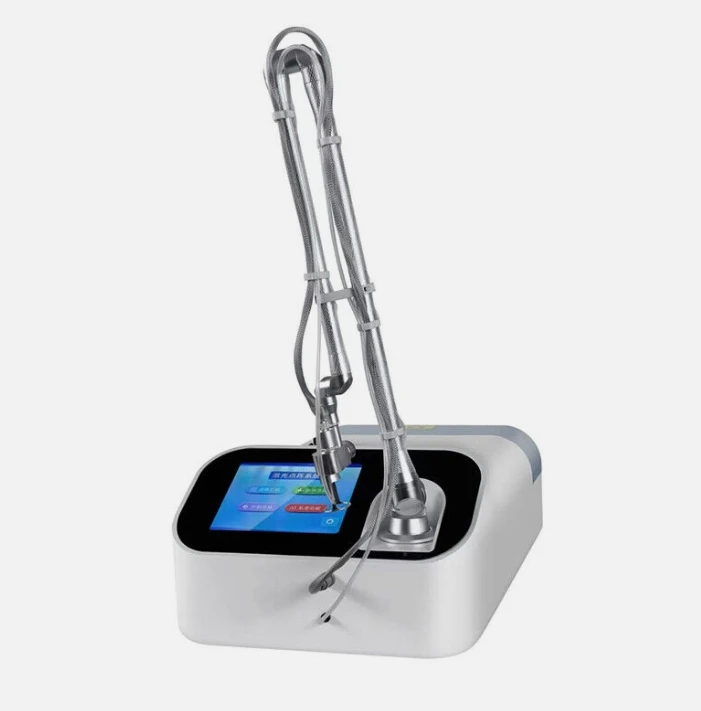
As a supplier of Co2 Laser Fractional Machines, I often encounter inquiries about the penetration depth of these devices. Understanding the penetration depth is crucial as it directly affects the efficacy and safety of various treatments. In this blog, I will delve into the concept of penetration depth, factors influencing it, and its significance in different applications of Co2 Laser Fractional Machines.
Understanding Penetration Depth
The penetration depth of a Co2 Laser Fractional Machine refers to the maximum distance that the laser energy can travel into the tissue. It is a critical parameter that determines the extent of tissue interaction and the subsequent biological responses. Different treatment goals require different penetration depths. For example, superficial skin rejuvenation may only require a shallow penetration, while deeper tissue remodeling for more severe skin conditions demands a greater depth.
The Co2 laser operates at a wavelength of approximately 10,600 nanometers, which is strongly absorbed by water in the tissue. When the laser energy is delivered to the skin, it heats the water molecules, causing vaporization and coagulation of the surrounding tissue. The penetration depth is mainly determined by the energy density, pulse duration, and spot size of the laser.
Factors Influencing Penetration Depth
Energy Density
Energy density, also known as fluence, is the amount of energy delivered per unit area. Higher energy densities generally result in greater penetration depths. However, there is a limit to how much energy can be safely applied to the tissue to avoid excessive damage. In clinical settings, the energy density is carefully adjusted based on the patient's skin type, the treatment area, and the desired outcome. For instance, when treating thin and sensitive skin areas, a lower energy density is used to prevent scarring and other complications.
Pulse Duration
Pulse duration refers to the length of time that the laser pulse is applied to the tissue. Longer pulse durations allow more time for the laser energy to penetrate deeper into the tissue. However, longer pulses also increase the risk of thermal damage to the surrounding tissue. Therefore, a balance needs to be struck between achieving the desired penetration depth and minimizing collateral damage. Modern Co2 Laser Fractional Machines offer a range of pulse durations to accommodate different treatment needs.
Spot Size
The spot size of the laser beam also affects the penetration depth. Smaller spot sizes tend to have greater penetration depths because the energy is concentrated in a smaller area. Larger spot sizes, on the other hand, distribute the energy over a wider area, resulting in a shallower penetration. When treating large areas of the skin, a larger spot size may be used to cover more surface area quickly, while smaller spot sizes are preferred for more precise treatments, such as targeting individual lesions.
Significance of Penetration Depth in Different Applications
Skin Rejuvenation
Skin Rejuvenation Laser CO2 Fractional Machine is widely used for skin rejuvenation treatments, including reducing the appearance of fine lines, wrinkles, and acne scars. For superficial skin rejuvenation, a shallow penetration depth of around 0.1 to 0.3 millimeters is sufficient to remove the outer layer of the skin (epidermis) and stimulate collagen production in the underlying dermis. This leads to smoother, firmer, and more youthful-looking skin.
Skin Resurfacing
Co2 Laser Skin Resurfacing Machine is used for more aggressive skin resurfacing procedures to treat deeper wrinkles, sun damage, and pigmentation problems. In these cases, a greater penetration depth of up to 1 millimeter or more may be required to reach the deeper layers of the dermis. However, skin resurfacing procedures are more invasive and have a longer recovery time compared to superficial skin rejuvenation treatments.
Vagina Tightening
Co2 Laser Vagina Tightening Machine is a relatively new application of Co2 laser technology. The laser energy is delivered to the vaginal mucosa to stimulate collagen production and improve tissue elasticity. The penetration depth in this case is typically shallower, around 0.2 to 0.5 millimeters, to avoid damage to the underlying structures. The treatment is minimally invasive and has a short recovery time, making it an attractive option for many women.
Measuring and Controlling Penetration Depth
In clinical practice, it is essential to accurately measure and control the penetration depth of the Co2 Laser Fractional Machine. Modern machines are equipped with advanced technology that allows for precise adjustment of the energy density, pulse duration, and spot size. Some machines also have built-in sensors and feedback systems to ensure consistent and reproducible results.
Before starting a treatment, a test spot is often performed on a small area of the skin to evaluate the patient's response and determine the optimal settings. During the treatment, the operator closely monitors the tissue reaction and adjusts the settings as needed to achieve the desired penetration depth and treatment outcome.
Importance of Professional Training
Operating a Co2 Laser Fractional Machine requires specialized training and expertise. A trained professional understands the principles of laser-tissue interaction, the factors influencing penetration depth, and how to safely and effectively use the machine. They are also able to assess the patient's skin condition, determine the appropriate treatment plan, and manage any potential complications.
As a supplier, we provide comprehensive training and support to our customers to ensure that they can use our machines safely and effectively. We also offer ongoing technical assistance and updates to keep our customers up-to-date with the latest advancements in laser technology.

Conclusion
The penetration depth of a Co2 Laser Fractional Machine is a critical factor in determining the efficacy and safety of various treatments. By understanding the factors influencing penetration depth, accurately measuring and controlling it, and using the machine under the guidance of a trained professional, we can achieve optimal treatment outcomes with minimal risk of complications.
If you are interested in learning more about our Co2 Laser Fractional Machines or have any questions about penetration depth and its applications, please feel free to contact us for further discussion and potential purchase negotiations. We are committed to providing high-quality products and excellent customer service to meet your needs.
References
- Anderson, R. R., & Parrish, J. A. (1983). Selective photothermolysis: precise microsurgery by selective absorption of pulsed radiation. Science, 220(4596), 524-527.
- Manstein, D., Herron, G. S., Sink, R. K., Tanner, H., & Anderson, R. R. (2004). Fractional photothermolysis: a new concept for cutaneous remodeling using microscopic patterns of thermal injury. Lasers in Surgery and Medicine, 34(5), 426-438.
- Babilas, P., Schmitt, L., Bodelon, G., & Landthaler, M. (2010). Laser and light treatment of acne vulgaris. Lasers in Medical Science, 25(2), 221-234.